
Hip Replacement Surgery vs Peptide Therapy: Comparing BPC-157 and TB500 as Alternatives for Joint Degeneration
A performance-based comparison of hip replacement surgery and peptide therapy, examining whether BPC-157 and TB500 may offer a non-surgical alternative for joint degeneration and advanced osteoarthritis.
BPC-157TB 500ARTHRITIS
2/16/20265 min read


Hip Replacement Surgery vs Peptide Therapy: A Performance-Based Framework for Joint Decision-Making
When facing advanced osteoarthritis, the decision often narrows to one high-stakes question: proceed with hip replacement surgery or explore biological support strategies first. Searches for alternatives to hip replacement reflect a growing desire to understand every available option before undergoing irreversible intervention.
This article compares hip replacement surgery with emerging peptide-based approaches — specifically BPC-157 and TB500 — from a physiology, recovery, and performance perspective. The goal is not to position one as superior, but to clarify mechanisms, limitations, and decision factors.
Key Takeaways: BPC-157, TB500, and Hip Replacement Alternatives
BPC-157 and TB500 are research peptides often discussed for joint recovery, tendon healing, and inflammation management in injury and biohacking communities.
Hip replacement surgery replaces the damaged joint with prosthetic components, while peptide therapy aims to support the body’s natural repair pathways.
BPC-157 is commonly associated with collagen organization, angiogenesis, and nitric-oxide signaling, mechanisms involved in tendon, ligament, and soft tissue healing.
TB500 is linked to thymosin beta-4 activity, which may support cellular migration, tissue regeneration, and systemic recovery processes.
Some individuals explore BPC-157 and TB500 together (“stacking”) because they may influence complementary biological pathways involved in tissue repair.
BPC-157 and TB500 are peptides studied for tissue repair pathways such as angiogenesis, collagen organization, and cellular migration. Some individuals explore these compounds as non-surgical options for joint pain or cartilage degeneration, though hip replacement surgery remains the most established treatment for advanced osteoarthritis.
Understanding Advanced Hip Osteoarthritis
Osteoarthritis of the hip involves progressive degradation of articular cartilage, narrowing of joint space, remodeling of subchondral bone, and chronic low-grade inflammation within the synovial membrane. Because cartilage is avascular (lacking direct blood supply), regeneration capacity is limited. As degeneration progresses, pain during weight-bearing and stiffness become constant rather than episodic.
At end-stage OA, structural changes may include:
Severe cartilage thinning or absence
Osteophyte (bone spur) formation
Synovial thickening
Altered joint biomechanics
When conservative management fails, surgery becomes the standard pathway.
What Hip Replacement Surgery Involves
First you have to understand your hip joint. It is the place where your thigh bone (femur) connects to the acetabular socket of your hip bone (ilium). The inside of the acetabular socket, also known as the acetabulum, is "cushioned" with cartilage, which is worn away with arthritis or other injuries. Total hip arthroplasty replaces the femoral head and acetabular socket with prosthetic components designed to restore articulation and eliminate bone-on-bone friction.
Surgical Benefits
High long-term success rates
Significant reduction in mechanical pain
Predictable recovery milestones
Considerations
Implant lifespan (15–25 years on average)
Surgical risks (infection, thromboembolism, prosthetic loosening)
3–6 months of structured rehabilitation
Permanent alteration of native joint anatomy
For many patients, hip replacement delivers dramatic quality-of-life improvements. For others, particularly performance-driven individuals, the permanence prompts exploration of biologic strategies first.
Emerging Peptide Therapy: Mechanistic Overview
Peptides such as BPC-157 and TB500 are discussed in joint recovery circles because of their influence on pathways involved in tissue repair.
BPC-157 Mechanism of Action
Research models suggest BPC-157 may:
Promote angiogenesis (via VEGF modulation)
Influence nitric oxide signaling
Support collagen organization
Improve tendon-to-bone healing in animal studies
TB500 (Thymosin Beta-4 Fragment)
TB500 is associated with:
Actin cytoskeleton regulation
Enhanced cellular migration
Revascularization
Inflammatory modulation
These mechanisms intersect with processes relevant to cartilage degeneration and soft tissue repair. However, large randomized human trials specific to osteoarthritis are limited.
Why Some Individuals Explore Peptides Before Surgery
High-intent search patterns for natural support for cartilage degeneration often reflect these motivations:
Preserving native anatomy
Avoiding downtime
Concern about implant longevity
Hope for tissue-level regeneration
Plateaued response to NSAIDs or steroid injections
In my own case, facing bilateral hip degeneration and discussing surgical scheduling, I chose to explore peptide therapy before committing to replacement. Within weeks, I observed progressive pain reduction, ultimately returning to full activity. (Read full case study here.)
While anecdotal evidence should not replace clinical studies, it reflects the lived experiences driving research interest.
Limitations of Peptide Research
Current data limitations include:
Predominantly animal models
Lack of standardized dosing protocols
Limited long-term safety trials
Absence of regulatory approval for OA treatment
Scientific plausibility does not yet equal established clinical consensus, however many physicians are beginning to adopt peptide therapy to support patient care.
Who Should Carefully Evaluate Peptide Use
Peptides affecting angiogenesis and inflammation may not be appropriate for:
Individuals with active cancer
Those with clotting disorders
Autoimmune disease without physician supervision
Pregnant or breastfeeding individuals
Patients on complex immunomodulatory therapy
Medical consultation is essential.
Decision-Making Framework
A structured approach may include:
Imaging-based severity assessment
Biomechanical evaluation
Response to conservative therapy
Risk tolerance analysis
Consultation with orthopedic and primary care professionals
Surgery and peptides represent fundamentally different categories: structural replacement versus biologic modulation. Each person should do their due diligence, consult with their doctor, and decide for themselves what path is best for them.
Structural Replacement vs Biological Support
related stories





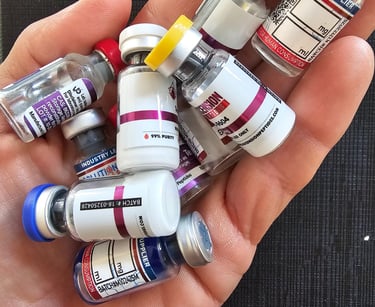
Looking for trusted suppliers? Compare these reliable sources
Glossary
Angiogenesis: Formation of new blood vessels supporting oxygen and nutrient delivery.
Articular Cartilage: Smooth tissue covering bone ends within joints.
Cyclooxygenase (COX) Enzymes: Enzymes inhibited by NSAIDs to reduce inflammation.
Nitric Oxide (NO): Signaling molecule regulating vascular tone and immune response.
Osteophytes: Bone spurs formed during joint degeneration.
Subchondral Bone: Bone layer beneath cartilage that remodels during OA.
Synovial Membrane: Joint lining producing lubricating synovial fluid.
Thymosin Beta-4: Naturally occurring peptide involved in cellular migration.
Works Cited
Hunter, D. J., & Bierma-Zeinstra, S. (2019). Osteoarthritis. The Lancet, 393(10182), 1745–1759.
Learmonth, I. D., Young, C., & Rorabeck, C. (2007). The operation of the century: Total hip replacement. The Lancet, 370(9597), 1508–1519.
Evans, C. H., et al. (2014). Biologics in orthopaedic surgery. Journal of Bone and Joint Surgery, 96(21), e186.
Sikiric, P., et al. (2010). Stable gastric pentadecapeptide BPC-157. Current Pharmaceutical Design, 16(10), 1224–1234.
Philp, D., et al. (2004). Thymosin beta-4 promotes angiogenesis. FASEB Journal, 18(2), 385–387.
Goldring, M. B., & Goldring, S. R. (2007). Osteoarthritis pathogenesis. Journal of Cellular Physiology, 213(3), 626–634.
Get in touch
Share with visitors how they can contact you and encourage them to ask any questions they may have.
Phone
123-123-1234
email@email.com